So I think I’ll share a bit about what I’ve been reading lately. This is a mix of assigned readings and my own selections. Enjoy!
- Bone by Fae Myenne Ng
This novel follows the experiences of Leila, a second-generation Chinese American girl seeking to reconcile her past, present and future. A work of raw emotion disguised as a cliché bildungsroman, Bone boldly confronts the divide between public and private domains. Memories, both reconstructed and recalled, influence the characters as they grapple with their identities as Chinese-Americans. The narrative is in perpetual motion, rejecting conventions of time, space and history, ultimately emphasizing the fluidity of human experience. The most interesting aspect of this novel is its blatant rejection of a linear timescale. By blending events of the past with the present, the novel questions how we accept certain versions of history as truth.
“It was so obvious. The stories themselves meant little. It was how hot and furious they could become. Is there no end to it? What makes their ugliness so alive, so thick and impossible to let go of?” (Ng 35)

- The Passion by Jeanette Winterson
Set during the Napoleonic Wars, Winterson’s novel uses two narrative voices to convey complex experiences. Henri, a French soldier in Napoleon’s army and Villanelle, a mysterious Venetian woman, cross paths within their surreal world. The desire to fully understand passion drives both characters to seek answers, causing them to experience love, lust and danger. By critiquing religion, morality and society, The Passion draws together traditionally opposed ideas and themes, questioning concepts of reality and successfully revising the genre of the novel.
“In between freezing and melting. In between love and despair. In between fear and sex, passion is” (Winterson 76)

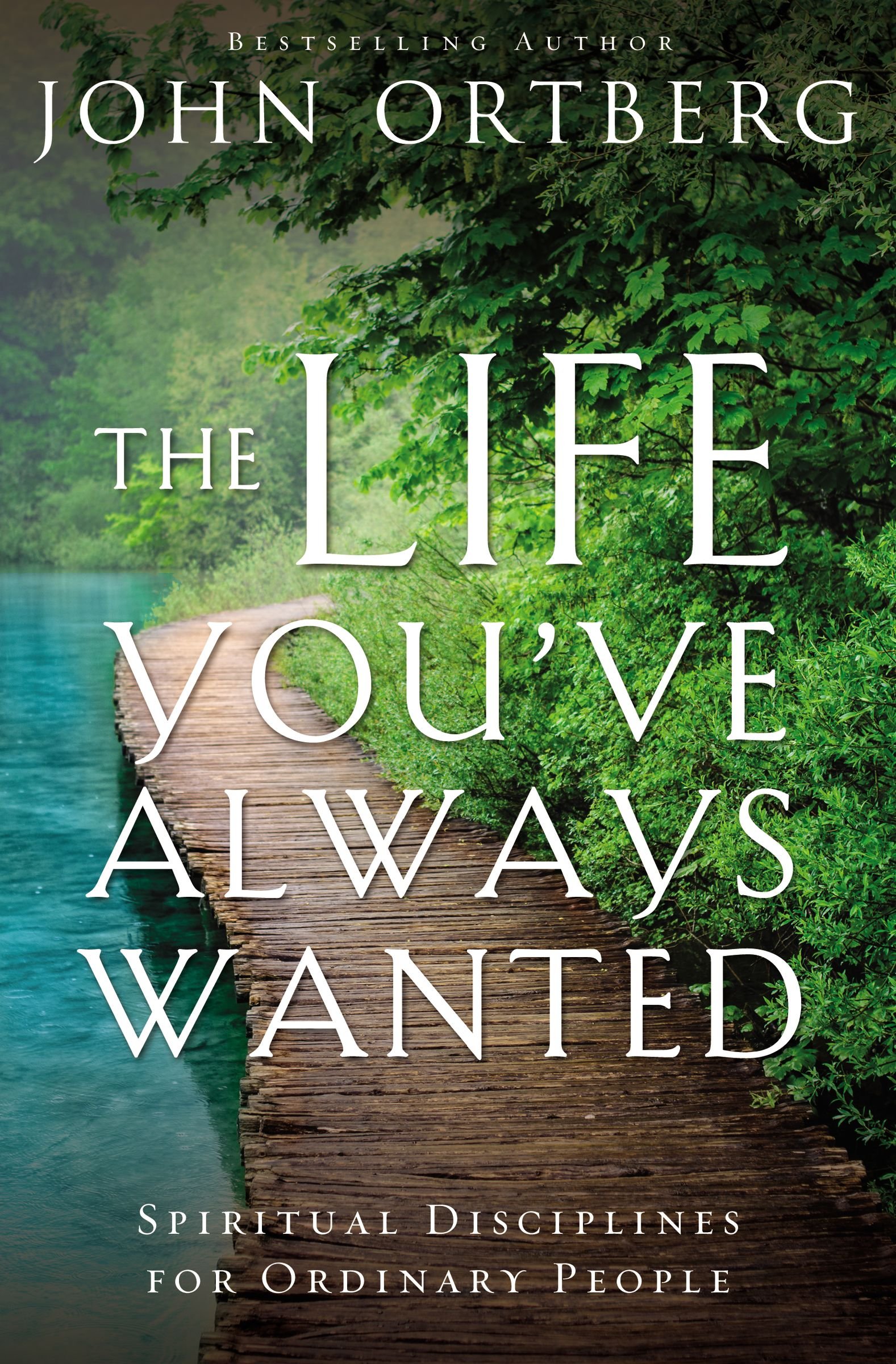
- The Life You’ve Always Wanted by John Ortberg
Through the presentation and explanation of key spiritual, Ortberg shows practical ways that anyone can grow stronger in their relationship with Christ. Ortberg’s writing is very relatable and includes touching anecdotes in each section. Each part discusses a spiritual discipline and ways to practice them. One of Ortberg’s key ideas is that we are training, not trying. When we try, we tend to fall back into old ways of life. While the book is easy to follow, Ortberg presents true spiritual challenges throughout. I found the section on the experience of suffering as a spiritual discipline to be especially eye-opening:
“The reason we can trust God is that he understands what it is to walk in darkness. One message of the Cross is that God chooses not to stand apart from our suffering. He is not unmoved by the pain of the creatures he loves. He embraces that pain and suffers with us” (Ortberg 221)
- The Reason for God: Belief in an Age of Skepticism by Timothy Keller
In some places in the world, it can seem like Christianity is a faith of the past. Keller argues that Christian faith is both growing and shrinking, resulting in faith that exists but is changing with culture. This book is divided into two sections: “The Leap of Doubt” and “The Reasons for Faith”. In the first section, Keller walks through seven common reasons that people reject Christian faith. In the second part, he provides seven reasons why Christianity makes sense. Keller’s writing is clear and well-researched, relying heavily on his experiences as a pastor of a church in New York.
“The founders of every other major religion essentially came as teachers, not as saviors. They came to say: “Do this and you will find the divine.” But Jesus came essentially as a savior rather than a teacher (though he was that as well). Jesus says: “I am the divine come to you, to do what you could not do for yourselves.” The Christian message is that we are saved not by our own record, but by Christ’s record. So Christianity is not religion or irreligion. It is something else altogether” (Keller 185)
- Are You There God? It’s Me, Margaret by Judy Blume
I have a friend named Margaret and we talk about God and matters of faith. For some reason, this book popped into my head and I thought I would check it out over break. I never read Judy Blume growing up, so I was interested enough to give one of her books a try (even though they are for kids!). This novel follows a sixth grade girl named Margaret through her experiences growing up and seeking faith. Since her father is Jewish and her mother is Christian, Margaret grows up without faith and starts to question where she belongs. Margaret learns that it can be a challenge to stand up for yourself in response to peers and culture. For me, the most relatable part of this book was Margaret’s struggle to connect with God:
“I’ve been looking for you, God. I looked in temple. I looked in church. And today, I looked for you when I wanted to confess. But you weren’t there. I didn’t feel you at all. Not the way I do when I talk to you at night. Why God? Why do I only feel you when I am alone?” (Blume 118)

- The Best American Short Stories of the Century, edited by John Updike an Katrina Kenison
When I go to the UW bookstore for school supplies, I sometimes find myself over by the discount books, spending money I don’t have! This volume was on sale, so in my mind it was justified. I have read short stories in English classes, and the reduced length requires authors to pack more detail into the short space. This collection includes short stories from 1915-1999, including authors from F. Scott Fitzgerald to E.B. White. One story I just re-read is A Jury of Her Peers by Susan Glaspell which involves the investigation of a farmhouse murder. The simple setting provides the perfect backdrop for a complex critique of traditional gender roles.
 Walking with Wisdom