Even though I worked a lot this summer, I also had plenty of time to read for fun. I thought I would share what I read over the summer and my reactions to each book. Since reading is one of my favorite activities, this post is quite long. People always ask what I think about the books I have read and I have trouble describing them on the spot. These are my condensed thoughts on some excellent books. Enjoy!
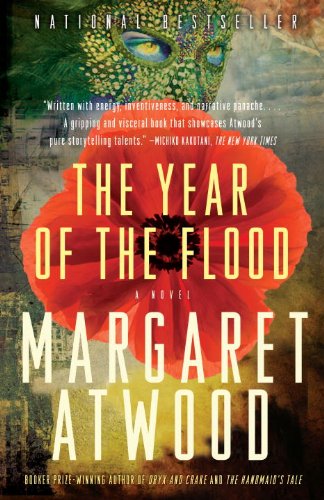
- The Year of the Flood by Margaret Atwood
My rating: 4/5
This book was listed as “optional” for one of my spring quarter English courses. In my experience, “optional” means that you’re going to need it. Anyway, I bought this book but we never read it for class. Since I had just read The Handmaid’s Tale, I was looking forward to getting another story from Atwood. Set in the near future, The Year of the Flood follows two women, Toby and Ren, as they struggle to survive a “waterless flood”. Much of the novel takes place in a community of “God’s gardeners”, who create psalm-like songs in honor of the earth.
At this point, natural resources are nearly depleted and the earth is in ruins. Ren and Toby find their paths crossing time and again, in tandem with fragile social structures and rapidly advancing technology. I enjoyed the character development and their interactions in the novel, however, the ending felt inconclusive. Since this is the second book of a trilogy, maybe I am missing some pieces in the bigger picture of Atwood’s futuristic universe.

- Harry Potter by J.K. Rowling
My rating: 5/5
I never grew up reading Harry Potter as a kid and this summer I decided that it was time to give it a try. As a whole, I was blown away by the depth and artistry of these novels, as each turn of the page kept me on the edge of my seat. You can find more of my thoughts at the following links:
Harry Potter Blog #1: https://exploringexperience.wordpress.com/2017/06/28/better-late-than-never-harry-potter/
Harry Potter Blog #2: https://exploringexperience.wordpress.com/2017/08/13/harry-potter-the-boy-who-lived/
Check out this amazing podcast! Reading Harry Potter as a form of sacred text:
Harry Potter and the Sacred Text: http://www.harrypottersacredtext.com/
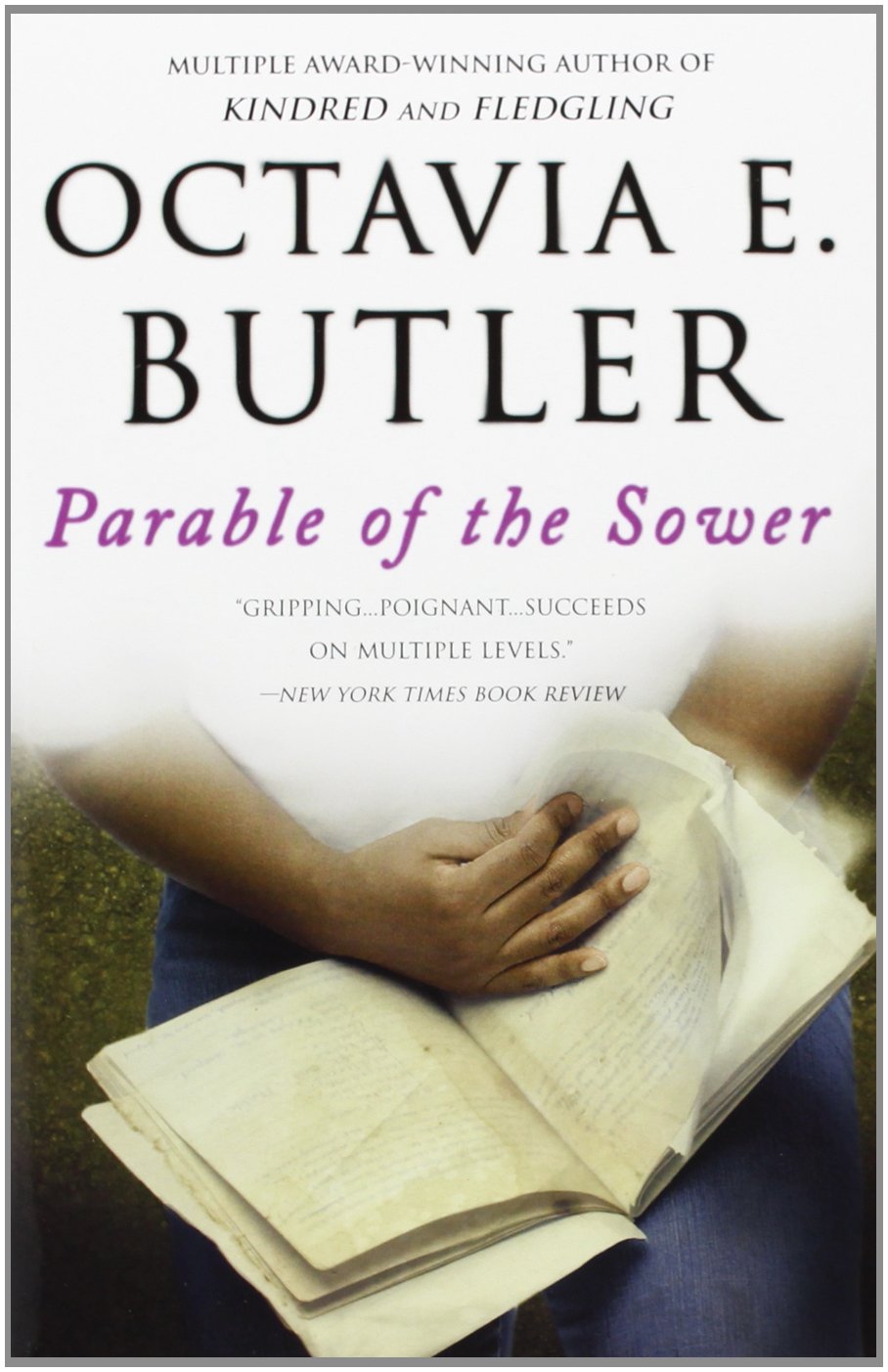
- Parable of the Sower by Octavia Butler
My rating: 5/5
In addition to The Handmaid’s Tale, I also read Octavia Butler’s novels Fledgling and Wild Seed this past spring for school. I was impressed by Butler’s prose and her novels that share titles with important Biblical parables, so I was looking forward to Parable of the Sower.
Much like Year of the Flood, Parable of the Sower is set in the year 2024 and immerses the reader in a world of inexpressible economic, social and religious pain. As the daughter of a Baptist minister, Lauren Olamina grows up with a strong sense of spirituality, despite the world she watches falling apart around her. An avid writer, Lauren soon discovers her own version of God, which is “change.” As she fights for survival, she discovers who she is and what she truly believes.
The novel is called Parable of the Sower in reference to Lauren developing her own belief system called “Earthseed” and her desire by the end of the novel to see it take root in good soil. The violence and drama of the first part of the book captured my attention, while the middle and ending felt slow. Even though Parable of the Sower felt anticlimactic, it provides necessary setup for the companion novel, Parable of the Talents.
In Matthew 13:1-23, Jesus tells the Parable of the Sower. In this story, Jesus describes a farmer who goes out to sow some seed. Some of the seed fell to the side and birds came and ate it up. Some fell on stony soil and it grew quickly, but when the sun came up it died, because it had no root. Some fell among thorns, which grew up and choked the seed, preventing it from bearing any fruit. Some fell on good soil and yielded much fruit, much more than what was originally sown.
Jesus goes on to provide the meaning of the parable, which reveals elements of the kingdom of God. The “sower” is planting the word and the seed is the good news of the gospel. Some people hear the word and Satan comes immediately, stealing the word that was sown in their hearts. Some people are like the seed on stony ground, who quickly accept the word with joy, only to fall away when they face trials. Some people are like the seed sown among thorns, for which the cares of this world, money and lust creep in, choking the fruit of the word. Some people are like the seeds to good soil, who hear the word, receive it, and bear fruit, much more than what was first sown.
This parable connects to the novel through Lauren’s “seed” of Earthseed and her desire by the end of the novel to have followers of her new belief system. Some people tell her she is crazy, while others discover a source of hope and purpose in her teachings. By the end of the novel, Lauren hopes to see her seed bear fruit by developing into a new community.
Enter a caption
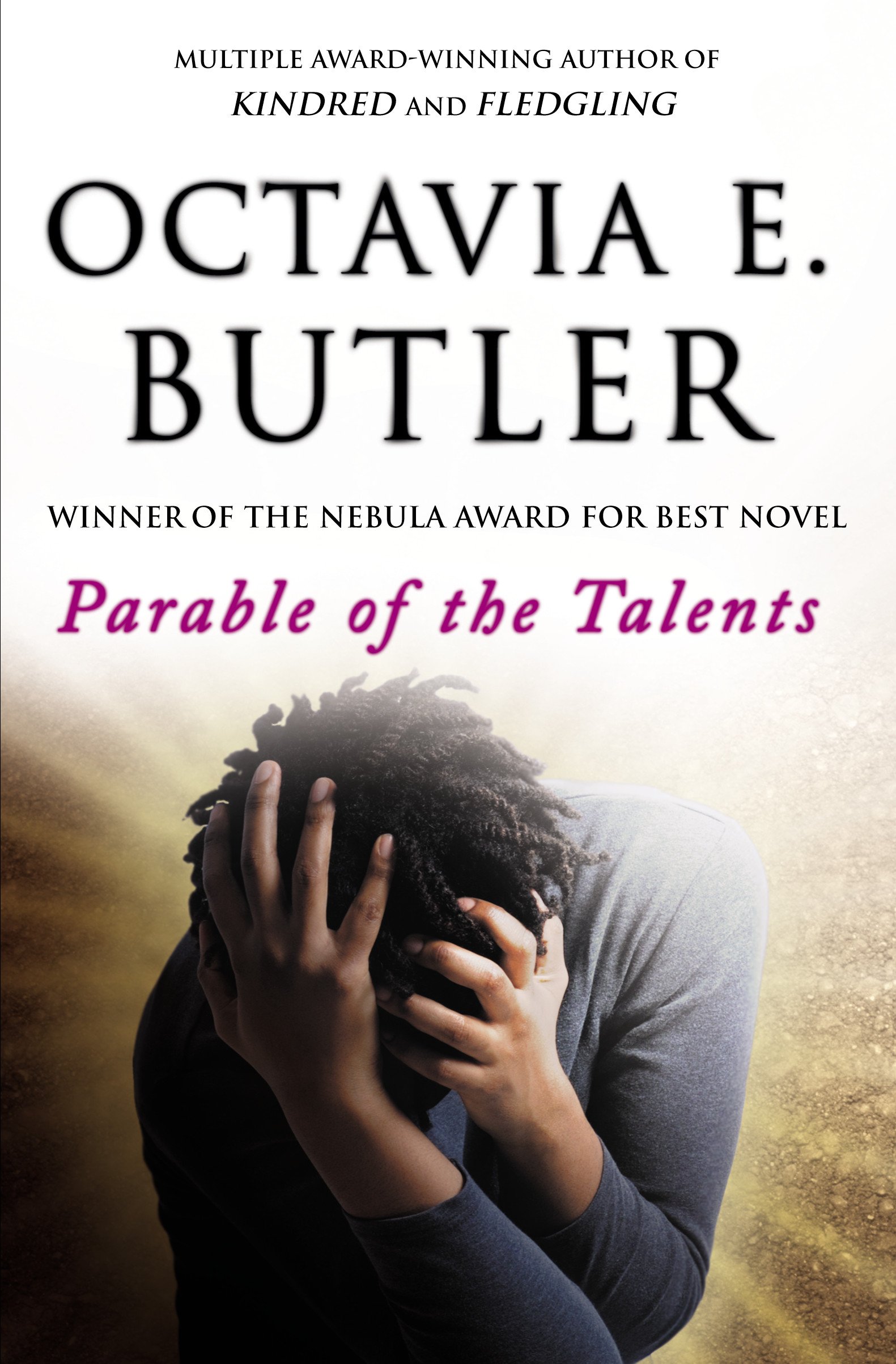
- Parable of the Talents by Octavia Butler
My rating: 5/5
After reading Butler’s Parable of the Sower, I was looking forward to Butler’s extension of the story in Parable of the Talents. Set in 2032, the events depicted in Parable of the Sower pick up right where Parable of the Talents left off. Told mostly from the journals of Lauren (who goes by her last name, Olamina), the novel opens with six years of peace at her Earthseed community called Acorn. The novel includes bits of narration from Olamina’s daughter as well as her brother, Marcus, who was found at the end of the last book. There has been a war between Canada and Alaska (which separated from the U.S. and is governed by Russia).
A religious fanatic has been elected president and will stop at nothing to fulfill his vision of a “Christian America.” Olamina’s Earthseed community is invaded and converted into a slave camp by followers of the new regime. After succeeding in their escape, Olamina and the other Earthseed members split into smaller groups with the goal of sowing their values in broken communities across the country.
The beginning of this novel was slow, but by the middle I was on the edge of my seat. I found myself completely immersed in the world of suffering and injustice that was thrust upon the characters, especially during their experience of enslavement. Even though this book was quite graphic and disturbing, it provides an eerie foreshadowing of the near future. The social problems Butler predicted in 1998 are some of the same problems causing violence in our society today.
In Matthew 25:14-30, Jesus tells the Parable of the Talents. In this story, there is a man going on a journey who entrusts his servants with various sums of his money. To one servant, he gives five talents, to another he gives two, and to the last servant he gives one. He gave money to each man according to his ability, and thus set off on his journey.
The servant who was given five talents traded the money and made an additional five talents. The servant with two talents did the same thing, so he got another two. But the servant who got one talent took the money and buried it in the ground, gaining nothing.
Soon the master returns and meets his servants. He praises the first two servants for their work and blesses their futures. When he comes to the servant with one talent, he explains that he hid the money in the ground and didn’t gain anything. The master is furious with this servant, calling him wicked and slothful. The parable ends with the master telling the servants that those who have will gain more, while those to have nothing will lose what little they have.
There are many interpretations of this parable and ways it could connect to Butler’s novel. The clearest parallel between the two stories is Olamina’s desire to see Earthseed grow and make returns, rather than remaining “buried in the ground.” She feels that it would be a waste for her to not share what she has discovered in her exploration and writing. In 1994, William R. Herzog II presented an interpretation of the parable as a story of “liberation theology” in which the third servant calls out the master for exploiting the servants and squandering his money. According to Herzog, “The parable of the talents is that man must act in solidarity with other men when confronting social, political and economic injustices.”
As a strong Christian, this novel caused me to think seriously about what I believe. It reminded me of The Handmaid’s Tale, which also uses traditional Christian teachings to exploit and punish specific sectors of society, especially women and people of color. I am revolted and angered by these distortions of the Christian faith. I believe that God desires all people to be in relationship with him, yet he forces himself on no one. Religious extremism results from people who desire to achieve major social change by using their beliefs to justify inhumane treatment of other people.
Yes, there is violence, bloodshed and slavery throughout the Bible which can be compared to the violence depicted in these books. However, both novels describe cruel, unjust and evil societies that claim to be “following God” while behaving in the most sadistic and dehumanizing manner possible. While I believe that our country needs to turn back to God, putting human beings in dog collars and subjecting them to slave labor is not how people should be taught to believe.

- Foreign to Familiar by Sarah A. Lanier
My rating: 5/5
I got this book for free after filling out a survey for a conference I went to last February. The conference is organized by Chi Alpha, which is a Christian student organization that I am involved with at UW.
Operating under the name “Discover the Nations”, the goal of the three day weekend is to expose Chi Alpha students to new cultural customs, food and challenges with the hope of providing students with the tools to engage with international students on their college campuses. The goal of the conference is to help American students learn how to approach international students without fear of being offensive or too forward, in order to find common ground and start building relationship.
Most of what we learned at the conference came from this book, which split most major world cultures into two groups: “hot-climate” and “cold-climate.” This succinct book provides insight a variety of dichotomies, such as relationship vs. task orientation, direct vs. indirect communication, individualism vs. group identity, inclusion vs. privacy, high context vs. low context as well as concepts of hospitality, time and planning.
I recommend this book for everyone, from college students to corporate business people. Our culture is ambient, which means we don’t notice the unusual things about our own culture until someone points them out to us. This book (and the conference) allowed me to become much more culturally self-aware. I was also able to develop a greater appreciation for other cultures and find better ways to interact with people from other countries.
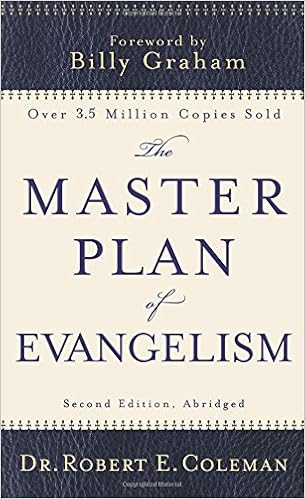
- The Master Plan of Evangelism by Robert E. Coleman
My rating: 5/5
This has to be one of the shortest, most powerful books on faith that I have ever read. Coleman’s direct, clear prose would have made an excellent Internet writer in our current technological age. This short volume outlines God’s plan for the salvation of the world, through his son, Jesus, using eight key points. He describes the methods used by Jesus during his life on earth, from choosing his twelve disciples to his death on the cross. Colman’s simple approach of returning to the scripture speaks to readers today as powerfully as when the book was published.
This quote from the chapter on “Impartation” really stood out to me:
“Love is like that. It is always giving itself away. When it is self-contained, it is not love. In this sense, Jesus brought clearly into focus before his followers just what was meant when “God so loved the world” (John 3:16). It meant that God gave all he had to those he loved, even his “only begotten Son.” And for the Son, in incarnating that love, it meant renouncing his own right of living and giving his life for the world. Only in this light – when the Son is put in place of the world – can one even begin to understand the cross. Yet in this realization, the cross of Christ is inevitable, for the infinite love of God can only express itself in an infinite way. Just as man by his sin had to die, so God by his love had to send his Son to die in our place. “Greater love hath no man than this, that a man lay down his life for his friends” (John 15:13).
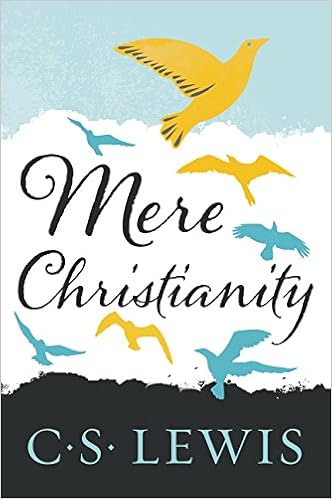
- Mere Christianity by C.S. Lewis
My rating: 5/5
I attempted to read this book many years ago and had to give it up. Back then, I wasn’t able to get anything out of Lewis’ dense style of writing. I was determined to give this classic text a second chance and I am proud to say I was able to get more out of it this time. Personally, I have a difficult time following Lewis’ train of thought in his theoretical works. By paying close attention, I was able to gain some better insight on his arguments. I will definitely read this book again in the future to catch more of what I may have missed. As a former atheist himself, Lewis makes brilliant arguments in defense of Christianity. For believers and non-believers alike, this book will certainly make you think.
“Look for yourself, and you will find in the long run only hatred, loneliness, despair, rage, ruin and decay. But look for Christ and you will find Him, and with Him everything else thrown in.”
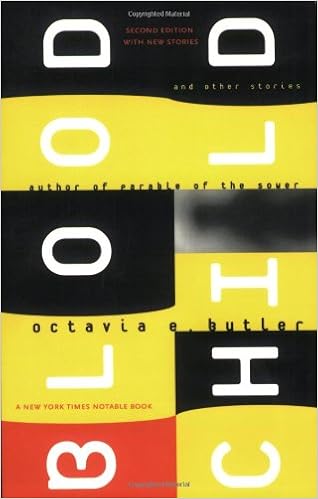
- Bloodchild and Other Stories by Octavia Butler
My rating: 5/5
Clearly, I’ve been reading a lot of Butler this summer, so I added her collection of short stories to my bookshelf. This unique compilation of short stories and essays provides insight into Butler’s writing process and personal experiences. As someone who enjoys biographical information on authors, I was pleased that this book includes personal reflections on how Butler got her start in writing. As an African American woman writing science fiction, Butler has been a pioneer in the genre for decades. The stories in this book are incredibly disturbing, thought-provoking and original. My favorite piece was the final story, titled “The Book of Martha.”
 Walking with Wisdom