For me, the annual holiday break means that I can get back into reading for fun. Here’s a list of what I read and some of my thoughts on each book. Enjoy!
- Song of Solomon by Toni Morrison
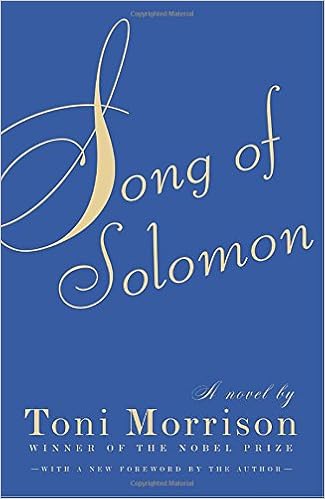
My rating: 4/5
Last spring quarter, I took an English class on theories and methods. When I registered, the theory was not listed on the registration page. I went ahead and bought the books, but I still didn’t know what I had signed up for. On the first day, I found many of the other students in the class had not seen the theory listed online. It turns out that the course was on feminism, but since I had already bought the books, I decided to give it a try. I was thankful for the learning experience of that class and the exposure it gave me to new novelists and literary theorists.
For this course we were assigned to read Morrison’s 1987 novel Beloved, which I found both impressive and intriguing. From that point on, I was excited to read more of Morrison’s work. In the feminism course, we compared Beloved with A Mercy. This past fall quarter, I read The Bluest Eye in my honors English seminar, followed by Sula and Song of Solomon, which I read just for fun. Having been published ten years prior to Beloved, Song of Solomon illustrates similar themes of memory, legacy and family ties. The recurring nature of the past is essential to the narrative impact of Song of Solomon, as reflected in Beloved and A Mercy. In all of Morrion’s novels, the past never seems to die. Instead, the restless past is reborn, revised and continually revisiting her characters that struggle to live in the present.
In comparison to some of her other works, readers may find the pacing of Song of Solomon to be slow or plodding. I would argue that Morrison’s pacing is intentional, creating the time and space to weave the tapestry of a rich family legacy. Upon reaching the end of Song of Solomon, I was once again struck with the literary genius that can be associated with the work of Morrison. Through sorrow and sarcasm, Morrison’s novel offers a unique interpretation of the idea of identity, both in the identification of the self and of others.
- Live Life on Purpose by Claude Hickman
My rating: 5/5
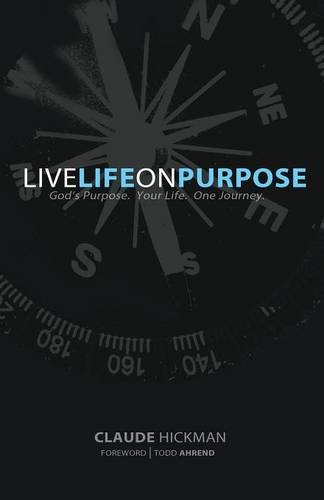
I bought this book last spring when “The Traveling Team” visited University Christian Fellowship at UW and gave us their presentation. The Traveling Team travels to college campuses all over the country, educating students about the global mission of Christ. Their talk was eye-opening for me, since I had never heard much about God’s desire to have his name be famous in all nations, all over the world before that point. Up until that time, I had exclusively been taught about God’s desire to give up his life for me, so that I could be free from sin and go on to live eternal life in heaven.
This book was written by Claude Hickman, who is the founder of the Traveling Team. This book sums up the Traveling Team’s guiding philosophy, which Hickman suggests can be expanded to influence the modern Christian’s worldview. The main argument made in this book is that in order to live a truly satisfying life as a Christian, you have to stop tacking God onto the American dream life that you create for yourself. Hickman argues that modern American Christians don’t live much differently from their non-believer counterparts at all. Maybe they swear a little less, drink a little less and go to church a little more, but other than that there are no obvious differences between the two groups.
Using scripture, Hickman makes a strong case for the global heart of God. Throughout the Bible, God makes it clear that believers have a singular mission to make his name famous in all nations, not just the United States. If we are not living to make God’s name great in all nations, then we are basically not living for him at all.
This book was incredibly challenging for me and I am still wrestling with the ideas that it presented. Fear, excitement, faith and trust are all included in my feelings about the future after college. I don’t have answers right now and maybe I never will, but that’s all part of this thing called life. I highly recommend his book for everyone, but specifically those who are seeking to redefine the purpose of their life based on God’s plan for the salvation of the world.
- The Giver by Lois Lowry
My rating: 5/5
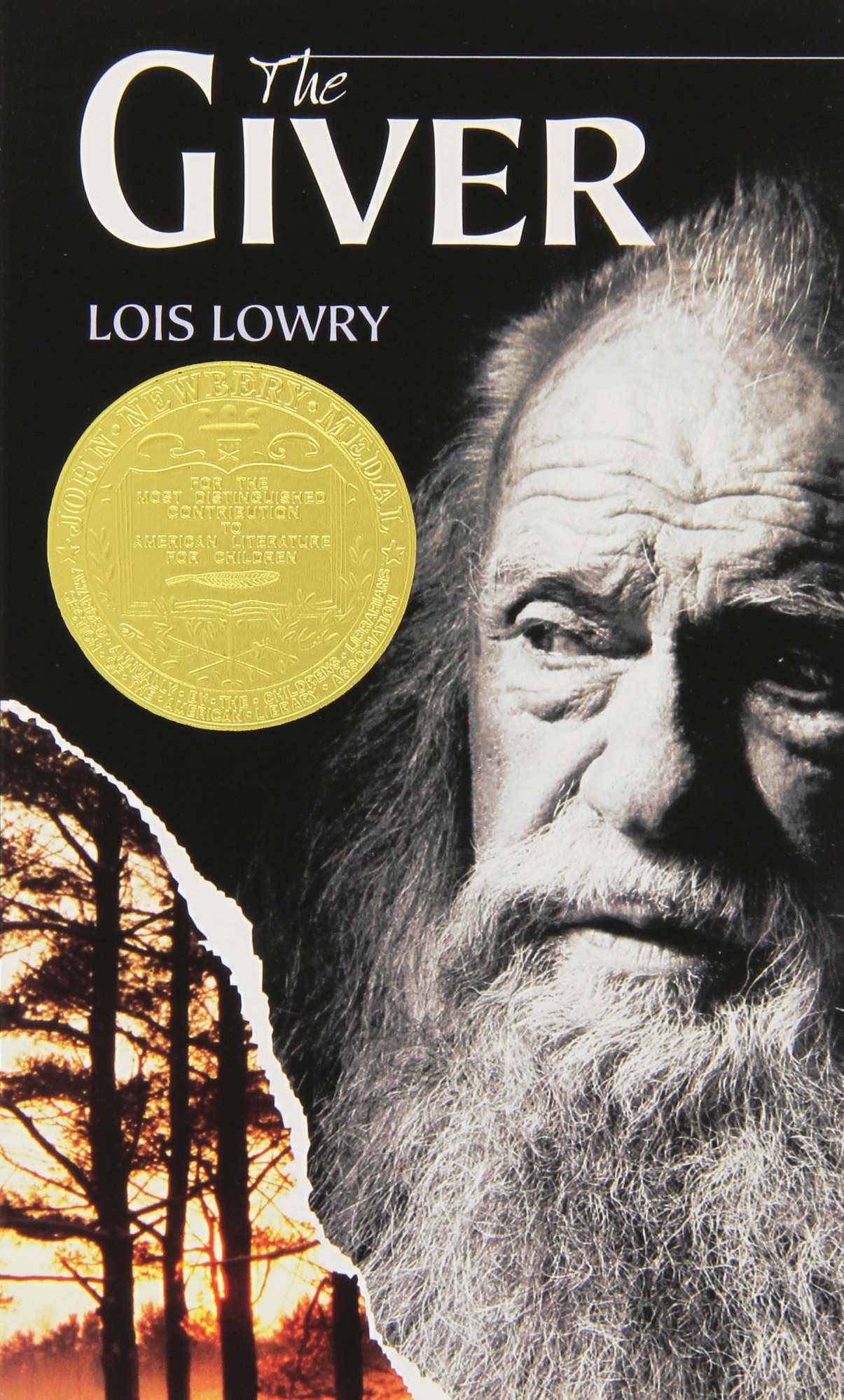
I have strong memories of this novel being one of the books I studied in my first “real” English class. I was homeschooled up until 7th grade, which is when I started attending a public middle school. I remember we listened to The Giver on tape and upon first exposure, I hated the book. When I learned the truth about “release”, I was disturbed. It was my first time reading a book from the dystopian genre, which is one that I enjoy now but not back then. I was recently talking to a friend about this book and decided to give it another re-read.
Ever since it was published in 1993, The Giver has won multiple awards, including the prestigious Newbery Medal for American literature for children. The novel presents a society that on the surface appears to be utopian, but a closer analysis brings darker truths to light. The narrative follows Jonas, a 12-year-old boy who has just been given a new adult role in his community. His job is highly unusual an requires him to conceal his experiences from family and friends.
The only person Jonas can confide in is his mentor, the elder known as the Giver. Through his experience, Jonas discovers there is much more to life, and to the future, than the life he had previously been living. Despite being written for children, The Giver raises questions about values, morals, pleasure and pain. Most importantly, it emphasizes the value of individual and collective memory through the enduring power of human emotion. Today, I would say that the concept, themes and questions raised by The Giver easily make it one of my favorite novels.
- Go Set a Watchman by Harper Lee
My rating: 3/5

While this novel was before To Kill a Mockingbird, it was not discovered and published until 2015. The manuscript that became Go Set a Watchman is now widely accepted as an expanded draft of what later became the famous novel. While the success of To Kill a Mockingbird garnered high expectations for this sequel, Go Set a Watchman gets stuck in the shadow of the novel that came before.
Go Set a Watchman takes us back to quaint Maycomb County with the now famous (in fictional circles) Jean Louise “Scout” Finch. We reunite with Jean Louise at the age of 26, who now lives and works in New York City. On her annual trip home to Maycomb, she reunites with Atticus, Aunt Alexandra, Uncle Jack and her new suitor, Henry. In a delayed coming-of-age story, Jean Louise struggles with issues of becoming an adult. Through racial tensions in Maycomb, she soon realizes that the world is more complicated than she once thought. As a child, she revered her father as a god and took his word as gospel. As a young adult, Jean Louise learns the painful truth of the inevitable failures of humanity, which she learns includes her father.
If we compare To Kill a Mockingbird with Go Set a Watchman, we see that the earlier novel is written through the eyes of Scout as a child while maintaining the adult awareness of a mature narrator. Scout notices and understands things that children would not typically notice. In contrast, Go Set a Watchman narrates present events through the adult voice of Jean Louise, who occasionally reflects on scenes from her childhood.
Through memory and reflection, a common melancholy chord is struck by both novels. Saccharine moments of familial devotion are easy to identify in both books, but especially so in Go Set a Watchman. It’s a grown-up version of the beloved To Kill a Mockingbird with Jean Louse struggling with romance, politics and her relationship with her father. Both novels close with a heartfelt image of Jean Louise and Atticus, suggesting that all’s well that ends well. If you want to read a novel by Lee, go for the classic and skip the sequel.
- The Screwtape Letters by C.S. Lewis
My Rating: 5/5
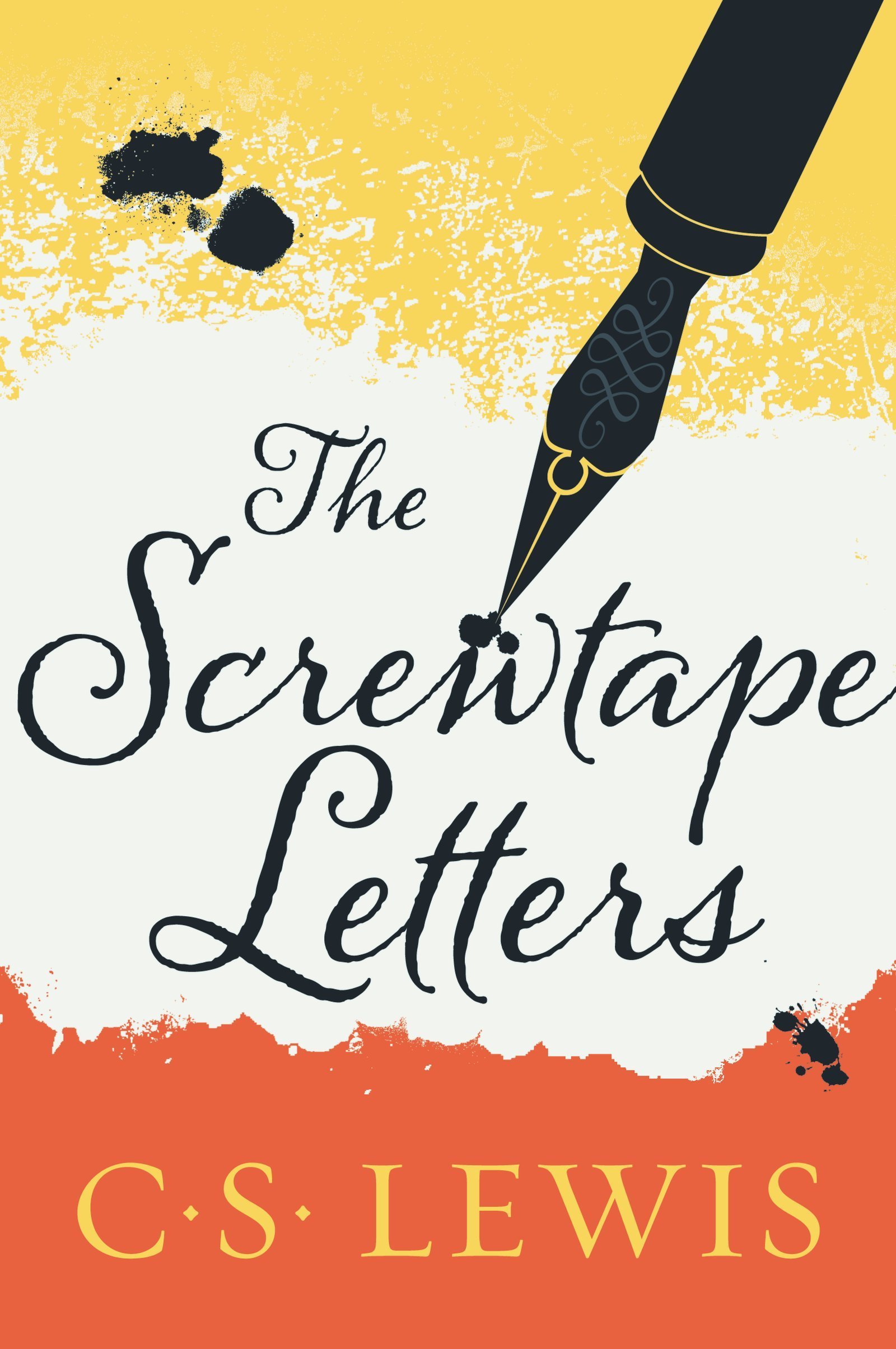
With much effort, I am slowly working my way through the writings of the highly acclaimed C.S. Lewis. I started my journey this summer by making a second attempt at Mere Christianity. While I still had a difficulty grasping the complexity of Lewis’ claims, I found the book to be quite enjoyable despite the extra mental effort that it required of me.
Just like with Mere Christianity, I once tried to read The Screwtape Letters when I was younger and was unable to finish it. Looking back, it now makes sense why this book had no value for me in the past. The Screwtape Letters requires that the reader have sufficient knowledge of spiritual influences on the physical world. In addition, as with most of Lewis’ books, the language is complex, convoluted and dense. This time through, my additional experiences with faith and complex literature enabled me to grasp most of Lewis’ basic claims. I was encouraged by this experience, since I know that Lewis’ writing contains brilliant theological gems. To put it simply, one must be willing to put in the mental effort in order to pull them out.
The novel is designed as a series of letters written by a devil named Screwtape, in which he provides advice to his nephew, Wormwood. By taking the perspective of Satan’s henchmen, Lewis puts himself in a position to redefine the experience of Christian faith. I think the short length of the novel as well as the decision to include characters and a plot are essential to the book’s strength. By presenting his theological and philosophical arguments through the voice of Screwtape, Lewis makes it easier for the audience to follow his train of thought. With refreshing wit and razor-sharp honesty, The Screwtape Letters offers brilliant insights into the nature of humanity and the eternal battle for the human soul.
- Interpreter of Maladies by Jhumpa Lahiri
My rating: 5/5

I was first introduced to the writing of Lahiri in a college English course I took in high school. We read her short story “Interpreter of Maladies” and ever since I have wanted to read the other stories in her collection.
With a style all her own, Lahiri explores the depths of human experiences and relationships through realistic depictions of seemingly mundane characters. Her stories reach beyond boundaries of generations and national borders, creating space for human connection. Expertly blending emotions of bitter and sweet, Lahiri’s short stories provide a tantalizing tales for the reader that is hungry for something new.
I believe that it takes a true master of language to draw a reader in and create a substantial piece of writing within the space of just a few pages. I found many of these stories to be heartbreakingly sad, yet I knew subconsciously that the characters being depicted were not real. However, I found that Lahiri succeeds in creating characters that are universally relatable, regardless of their status as fictional entities. Her work creates rich images of familial bonds, cultural ties and the complexity of human relationships. With each turn of the page, Lahiri proves herself worthy of the Pulitzer Prize she was awarded for this collection.
 Walking with Wisdom