When it comes to music, sometimes I think I was born in the wrong generation. While I enjoy music from the present, music from the past seems to have a unique quality. There’s something about songs and artists that have stood the test of time, that continue speaking to us today as they did in the past.
Like many others, my first experiences with music are associated with memories of my parents. Growing up, my dad was our main chauffer, so his music became our music. My dad has been passionate about music since he was young, learning to play saxophone and playing in a dynamic jazz band in high school.
As far as musical genres, my dad is still a big fan of jazz. He also enjoys R&B, soul, disco and funk. On rides to tennis, dance classes and friend’s houses, we listened to modern soul bands like Incognito and Santa Fe and the Fat City Horns. I know many songs by Earth, Wind and Fire, characterized by the contrast between Philip Bailey’s falsetto and Maurice White’s baritone.
The mix included the velvety tones of Luther Vandross and Stevie Wonder’s classic post-disco tracks. We listened to Stevie Nicks’ later solo work, following her career a member of Fleetwood Mac, including her kicked-up cover of “Rhiannon”.
Out of all the great music I listened to with my dad, Bruce Springsteen never made it in the mix. Springsteen got big right around the time my dad graduated high school and went on to college, so he listened to “The Boss” quite a bit back in the day.
I’m not sure what prompted me to start listening to Springsteen’s music. I knew he was successful and I had probably heard “Born in the USA” in the grocery store, but otherwise I had very little exposure.
In my opinion, great music tells a compelling story and often has a specific message. Music can transport you to another time and place, especially music from the past. We are intrigued by stories from times gone by, and we can feel empathy for the people described in songs.
The enduring power of classic music is found in its message, story, heart and soul. These stories have the ability to take us back to the past, while at the same time providing new perspectives on our present. When we listen closely to music from the past, we find that some things change while others never do.
Every summer, I revisit my obsession with Springsteen. His American rock sound and gritty, wailing voice just seem perfect for evening drives with the windows down (Thunder Road, anyone?). My dad once asked me, “Do you really like this? You’re not playing it just for me?” and my answer was “Yes!”
For me, the magic of Springsteen’s work lies in his blending of genres, pulling from the influences of Americana, folk rock and occasionally a splash of country. He includes a wide variety of instruments in his music, from emotional saxophone solos to heavy piano ballads. Springsteen sets himself apart from other artists as a masterful storyteller, penning lyrics that can only be described as American poetry.
Some of his longer, in-depth pieces feel novelistic in scope, developing themes that still speak to listeners today. The world Springsteen creates in his songs is not black and white – he gives it depth by adding shades of gray. As his characters wrestle with the realities of good and evil, hope and despair, love and death, they often find that their emotions are more complex than they first believed.
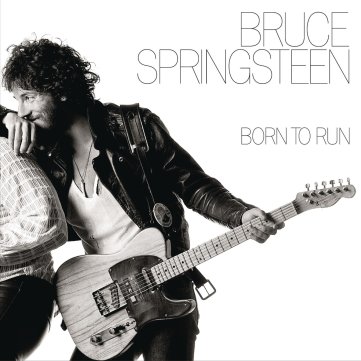
On his 1975 album Born to Run, Springsteen opens with one of his most popular tracks – “Thunder Road.” The song tells the story of a young man and his girlfriend, Mary, going out for a ride down “Thunder Road”. As with many songs about young love, the track shimmers with an undeniable sense of hope and optimism, bolstered by themes of freedom, escape and the magic of romance. Near the end of the song, Springsteen sings:
“There were ghosts in the eyes
Of all the boys you sent away
They haunt this dusty beach road
In the skeleton frames of burned-out Chevrolets.
They scream your name at night in the street
Your graduation gown lies in rags at their feet
And in the lonely cool before dawn
You hear their engines roaring on
When you get to the porch they’re gone
On the wind.”
By describing Mary’s past boyfriends as ghosts, Springsteen alludes to the somewhat supernatural experience of love. Mary’s past continues to haunt her, from the burned-out Chevrolets to her graduation gown. While Springsteen shades in the darkness of Mary’s past, he also turns toward the light of hope at the end of the song. Mary’s boyfriend, his car and their love give her the freedom to escape the darkness of her past. Through the power of love, her memories of the past are rendered impermanent and blow away “on the wind”.
Born to Run opens with a sense of bright optimism and closes with shadowy despair. On his final track of the album, “Jungleland”, Springsteen mirrors the arc of Born to Run within the track as two desperate lovers descend into defeat and hopelessness. The protagonist of the song, the “Magic Rat” and his “Barefoot Girl” begin by driving across the Jersey state line. The Rat gets involved with gangs and the police in his relentless pursuit of the American Dream. In the end, we discover that the Rat’s dream, once held close to his heart, is the one that ends his life.
“Outside the street’s on fire
In a real death waltz
Between what’s flesh and what’s fantasy
And the poets down here
Don’t write nothing at all
They just stand back and let it all be
And in the quick of the night
They reach for their moment
And try to make an honest stand
But they wind up wounded
Not even dead
Tonight in Jungleland”
Near the end of the song, Springsteen returns to a dance metaphor he used earlier to describe violence in the streets. Earlier he sings: “Man there’s an opera out on the Turnpike / There’s a ballet being fought out in the alley.” Through these illustrations, Springsteen emphasizes the complexity of violence and human interaction. His metaphor suggests that grace and conflict, beauty and darkness can exist in the same space. In this final section, the dance becomes a “death waltz” as time seems to slow down.
We learn that this dance lives “between what’s flesh and what’s fantasy”, suggesting that the line between the Rat’s dream and reality is blurring. In this section, despair and defeat begin to take root as the Rat realizes that his dream is dying. No one cares about him and he dies anonymously. Springsteen makes it clear that even the witnesses have a dream that they cling to for hope. In the end, everyone fails to reach their dream, falling into a cruel abyss of a partial, half-dead existence.
In his 1980 album The River, Springsteen brings together the beautiful romance of “Thunder Road” with the despair of “Jungleland”. His most poignant example of these themes can be found on the title track, “The River”, which tells the story of a young woman named Mary and her husband, through the journey of their marriage. The song echoes with a haunting harmonica, foreshadowing Springsteen’s emerging style on the album Nebraska. In the song, the river is a symbol hope for the couple and their family.
“Now those memories come back to haunt me
They haunt me like a curse
Is a dream a lie if it don’t come true?
Or is it something worse”
As he contemplates his relationship with his wife, the husband is haunted by the past of their young love. For him, these beautiful memories have taken on a darker hue. Perhaps their circumstances have put new strains on their marriage, making the happy memories of their love feel like an ugly curse. They dreamed of creating a perfect life together, but now they face the reality of a cruel, relentless world. At the very end of the song, our protagonist is prompted to return to his source of hope, the river, along with his wife. They return, though they “know the river is dry”, suggesting there is no hope left in which they can immerse themselves.
From The River, Springsteen continues down his path of despair in his 1982 album Nebraska. Springsteen’s big hits like “Thunder Road”, “Born to Run” and “Born in the U.S.A” are great songs, but I think his lesser-known song “Atlantic City” was the one that really got me hooked. This softer, distinctive song is characterized by a haunting harmonica that pairs perfectly with Springsteen’s poetic lyrics. The song tells the story of a young couple’s escape to Atlantic City, New Jersey, where the husband intends to take a job in organized crime. The song opens with a reference to mafia violence in Philadelphia and wrestles with the inevitability of death. As the chorus, Springsteen sings:
“Everything dies baby that’s a fact
But maybe everything that dies someday comes back
Put your makeup on fix your hair up pretty
And meet me tonight in Atlantic City”
In this song, our protagonist struggles with the brevity of human life, the inevitability of death and his participation in arranging murder. He accepts that death is inevitable, yet also believes that the past may not be fully gone. The recurrence of the past in the present is a theme that can be found in many of Springsteen’s poetic lyrics. For better or worse, the past continues returning, manifesting itself in a variety of forms. After coming to this realization, our lovers in this song choose to focus on the present, rather than worrying about the future or lamenting the past.
These are just a few examples of Springsteen’s ability to tell great stories, by writing lyrics that have an emotional impact for generations. His work reminds us that the past is always with us and that we all encounter the eternal struggle between life and death. He shows us that while some things may change, others never do. In my book, we can call him an American poet.
 Walking with Wisdom