
When you think of something truly beautiful, what do you picture? Perhaps it’s watching a brilliant orange sunset over a beach, your toes snuggled in the warm sand. Maybe you think of a cozy cabin with a well-stocked bookshelf, surrounded by freshly fallen snow. Many find beauty in nature, the embrace of a loved one, or through paintings, sculpture, or live art.

For me, watching a professional ballet company perform is truly beautiful. When I was in high school, I remember seeing A Midsummer Night’s Dream performed by the Pacific Northwest Ballet. My friend and I would get tickets close to the curtain when they were being sold at just $5. On this particular night, we were lucky to get seats on the main floor and quite close. I remember they were in row 11 or 12 back from the orchestra pit on the main floor.
I love seeing Shakespeare’s works performed as ballets. It adds a new dimension to his stories…and makes them a bit easier for a modern audience to understand! I remember the costumes and sets were simply stunning: misty forests, bright meadows, and shadowy hollows set the stage for each scene. The costumes were filled with bright colors, variegated hues, and shimmering jewels. The fairies (of which this tale has many) wore pairs of delicate gossamer wings that shimmered in the lights. It was amazing to see the dancers up close, with their technique and artistry on full display.
To dance ballet professionally is an amazing physical feat, requiring years of dedication and hard work. They create beauty through aesthetics and their technique. To succeed as a dancer, perfection is expected. Each performance is physically demanding, yet the artists make it look easy, effortless, and beautiful. This natural grace is the mark of a true professional….one who ceases to be mortal and creates magic.
As a child, I experienced the beauty of ballet for myself. I remember those moments of magic…dressing up in beautiful costumes, waiting in the wings, breathing in the smell of musty curtains and fresh hairspray, watching motes of dust float through the bright stage lights. I remember hearing our music and entering onto a smooth black stage, being enveloped by the velvety hush of a dark theater, filled with people watching us. I remember the pure joy and beauty of creating art, and how special it felt to be part of something much bigger than myself.
In our dance studio, I remember how the sunlight would stream in through the large windows on early fall and late spring afternoons. On long winter nights, rain drummed on the roof as we huddled near a heater in our tights. For me, there was nothing more beautiful than having a great day in ballet class. Beauty felt like completing a tough allegro combination without sacrificing technique. It felt like balancing en pointe, sensing strength and grace in my body. It felt like turning into a smooth, perfectly centered pirouette and ending it with control. Beauty felt like flowing through a sweeping grand allegro, using the entire space to take flight across the room.
In those years, not only was I creating beauty, but I felt beautiful inside myself. But as time went on, dance became less about creating beauty and more about achieving perfection as I placed greater expectations on myself. I still loved to dance, but the technical expectations of ballet made me believe that “beauty” and “perfection” had to be synonymous. Nothing flawed could ever be beautiful.
Even outside the world of ballet, we often associate “true beauty” with our subjective definitions of perfection. We believe that which is flawless is beautiful. However, there is nothing inherently wrong with beauty – in fact, God created beauty for us to enjoy and delight in. If you take a hike, walk along a beach or stroll through a garden, you will see God’s design and desire for the earth to be filled with beauty in many different forms.
As humans created in God’s image, we are filled with beauty, yet we are not perfect. This makes me think of a Japanese pottery tradition I once heard about called “kintsugi”, which literally means “golden” (kin) and “repair” (sugi), and describes a process of repairing broken ceramics with gold, leaving a visible seam. The ceramics shatter in random patterns, so no two pieces are exactly alike. As each piece is repaired, the “scars” become part of the beauty of the new pot.
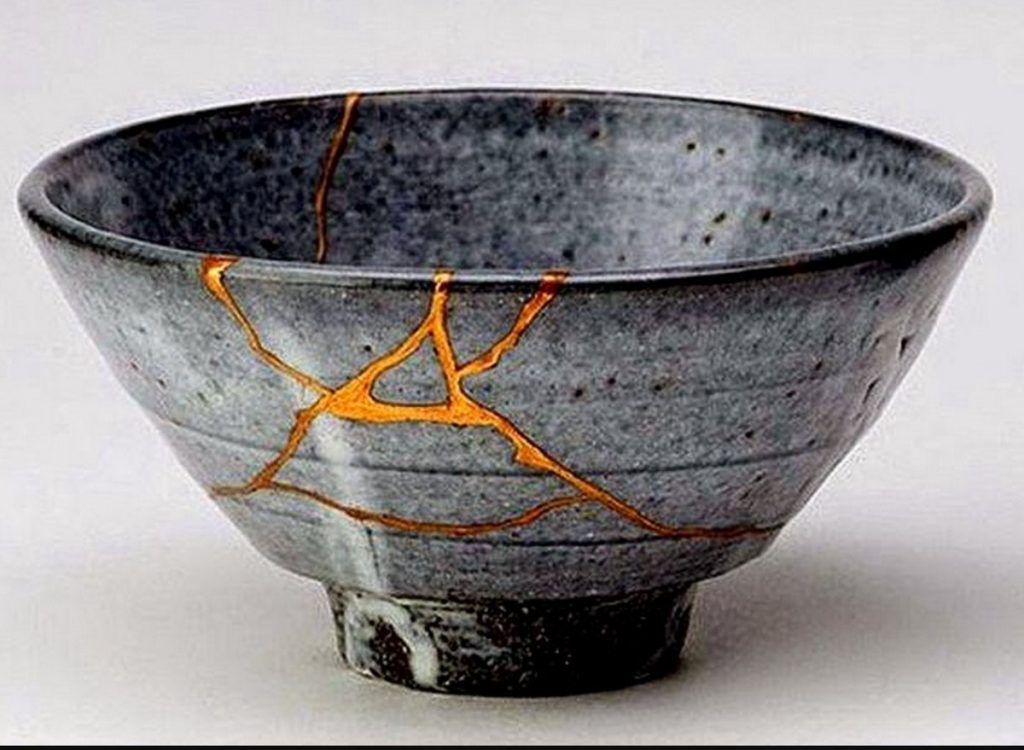
So what do we make of our imperfections, despite our desire to be beautiful? Is it possible to find beauty in that which has been deemed flawed, broken, or imperfect? The most beautiful thing about God is who He is, and who He creates us to be. God sees infinite beauty in every person He has created, but He’s not content to leave us as we are.
Every day that we live and learn to love God more, to listen to His voice, and to love those who are unloveable, we are being refined by Him. Just like kintsugi, God takes our shattered pieces and seals them together with gold. He doesn’t deny or dismiss the past or sweep the broken pieces under the rug. We all have lived through pain and will continue to face pain in this life. Through our pain, God doesn’t leave us shattered. He takes our flaws and makes them beautiful.
I have a friend who once said, “Within your imperfections lie your stories of grace.” Even more than our successes and moments of perfection, our fears, flaws, and failures tell the story of God’s grace in our lives. It’s too easy to let success and perfection point back to us, not back to our Creator. Our fears reveal that God can be trusted and that He hears when we call (Jer. 29:12-13). Our flaws create space for God to enter and do His healing, for He is mighty to save (Zep. 3:17). Our greatest failures show that our God is our Savior, not only overcoming human sin but conquering death itself through the cross (Rom. 6:1-14). We may not like our imperfections and try to hide them from the world, but when we do this, we fail to share the true testimony of all the ways God has worked in our lives.
I may not dance as much as I used to, but I hope to continue seeing and creating beauty in this life. I see beauty in nature and the glory of God’s creation, in the mountains, rivers, forests, beaches, sunrises, and sunsets. I see beauty in my workplace, where people bring their skills and gifts together for a greater purpose. I see beauty in my relationships with family and friends, how we walk through life together with laughter and tears. I still experience beauty in my physical body, rejoicing in physical health, strength, and the gift of movement. I see beauty in the written words found in books, and delight in sharing a few of my own.
Even though I have flaws, failures, and imperfections, they are scars that help tell God’s story of grace. To me, that is truly beautiful.

“But worth, value, and beauty is not determined by some innate quality
But by the length for which the owner would go to possess them
And broken and ugly things just like us are stamped “Excellent”
With ink tapped in wells of divine veins” “Lofty”- Propaganda
 Walking with Wisdom